
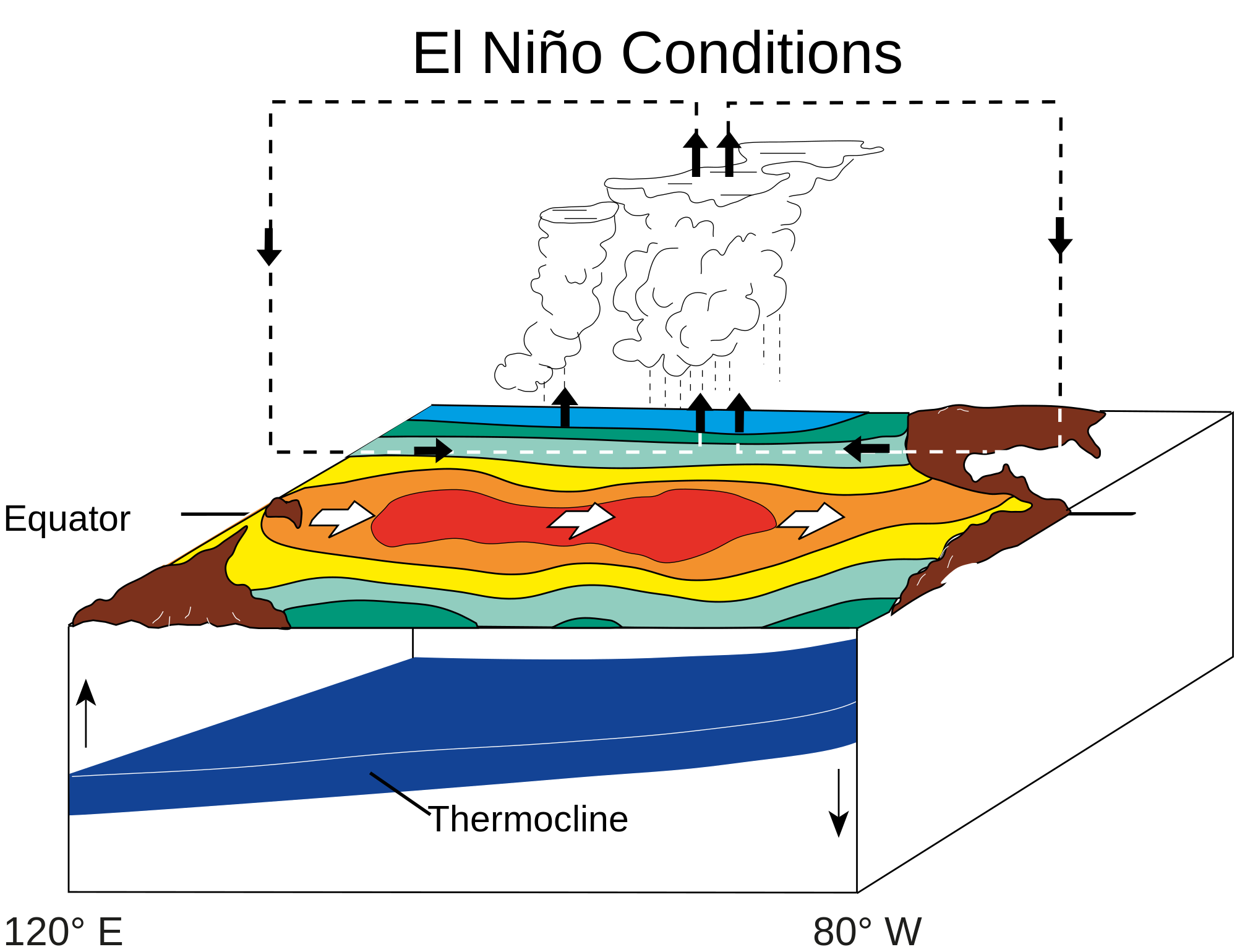
A study of climate records has shown that El Niño events in the equatorial Pacific are generally associated with a warm tropical North Atlantic in the following spring and summer. About half of El Niño events persist sufficiently into the spring months for the Western Hemisphere Warm Pool to become unusually large in summer. Occasionally, El Niño's effect on the Atlantic Walker circulation over South America strengthens the easterly trade winds in the western equatorial Atlantic region. As a result, an unusual cooling may occur in the eastern equatorial Atlantic in spring and summer following El Niño peaks in winter. EL Nino is expected to effect New Zealand for the next 3-4 months which will have a major effect on New Zealand dairy farmers and sheep and beef farmers as the EL Nino is predicted to cause major drought conditions. This is not good news for dairy farmers as they already have a low payout to contend with.
